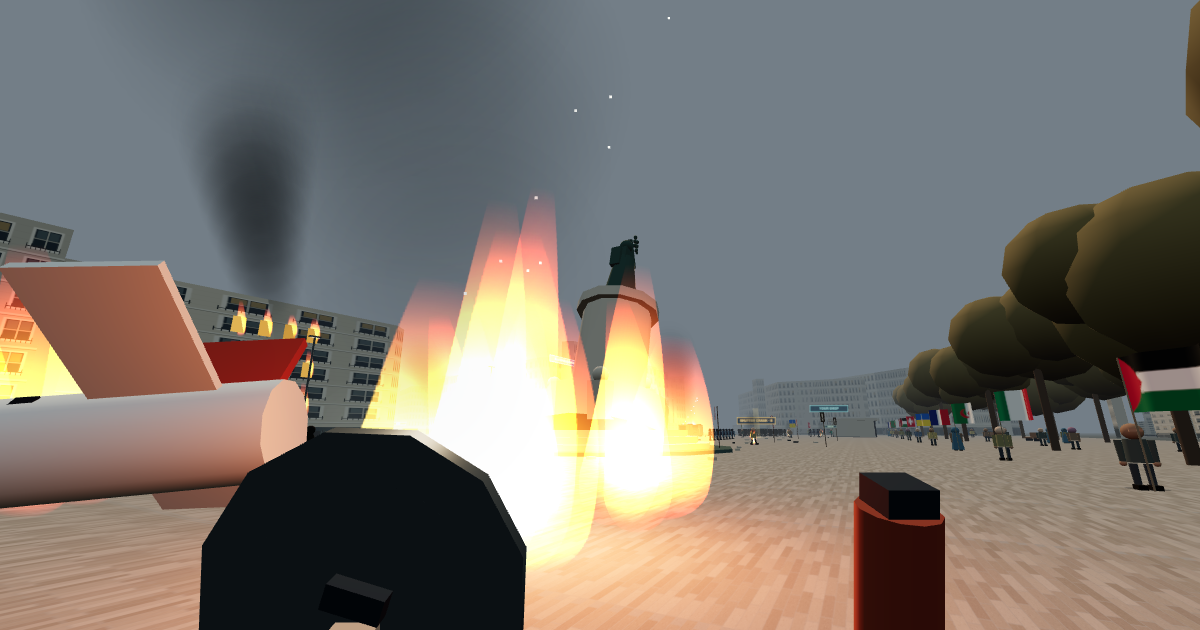
It began with arguments about teachers, classrooms and the school day. By October 17, France was facing a much broader confrontation: huge street demonstrations, organized clashes with police, burning public buildings and shops stripped of their stock. Understanding how those events overlapped is the story behind France Burns.
The school movement did expand beyond its original demands. Political organizations and unions joined it, and the government accused radical groups of exploiting it. But the evidence describes several overlapping groups, not one crowd with one purpose. Reuters reported both hundreds of thousands of peaceful marchers and violent groups attacking buildings and police on the same day. For a shopkeeper facing a broken window, the distinction did little to protect the business—but it matters when explaining how the crisis developed.
How did the French school protests begin?
The immediate demands were practical: enough teachers, usable buildings and better conditions for learning. Euronews traced the movement to students and teachers in Créteil on September 17, followed by rapid sharing of videos and calls to mobilize on social media. Complaints about crowded classes, missing staff and worn-out facilities resonated elsewhere.
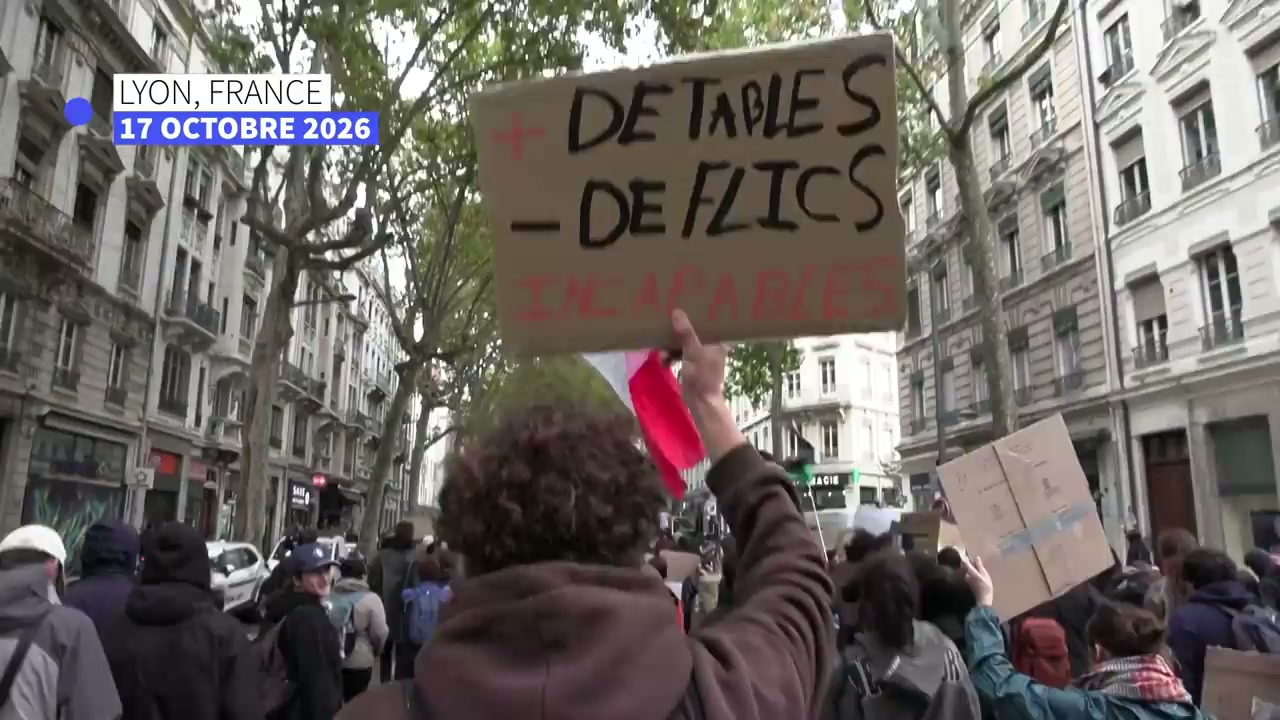
School blockades, peaceful demonstrations and violent confrontations developed alongside one another. By early October, confrontations and serious injuries had become part of the dispute too. Euronews reported investigations after teenagers suffered severe injuries in Lens and Tours, while also describing attacks and damage around schools.
The shift was therefore about more than additional slogans. The argument moved from conditions inside schools to how the state was responding outside them. Anger about policing could bring people into the streets even when they had not participated in the original school blockades.
Were 400 or 500 schools affected?
The figure has a specific date and meaning. Le Progrès reported that Education Minister Édouard Geffray expected 400–500 establishments to close fully or partly on Monday, October 5. It was a forecast of interrupted schooling, not a tally of schools burned or a final total for the entire movement.
Those distinctions matter because “affected,” “blocked” and “closed for safety” are different measures. Adding figures from successive days would count some schools repeatedly. The article and map use dated snapshots rather than presenting a single rolling school total.
Was the school movement co-opted?
Political involvement is documented; a centrally directed takeover is a stronger, disputed claim. Euronews reported La France insoumise’s support for the students and accusations that it was exploiting their anger. Jean-Luc Mélenchon said his party supported the movement without organizing it and wanted it to remain nonviolent.
A useful test is the evidence offered for government allegations. Le Monde examined a police intelligence note cited in the debate. It covered Seine-Saint-Denis, not all France, and recorded outside activists or representatives at six of 27 school actions. The newspaper judged that the material showed attempts to capitalize on a fragmented movement more clearly than control over it. That limits what the note can prove nationally.
By October 17, broadening the movement was explicit. Le Monde described a planned convergence of students, Yellow Vests, unions, professional groups and left-wing politicians. Its reporters also described separate groups seeking confrontation while other processions continued peacefully. The change was real: a school campaign had become a meeting point for wider grievances, political ambitions and people prepared to use violence.
The most defensible account is that organized politics helped broaden the protests, while violent actors and opportunistic looters exploited the crowds. That does not establish that every participant abandoned school demands, or that one party commanded every attack. Nor does political support, by itself, prove responsibility for a specific crime.
What happened when the protests reached the streets?
On October 17, Reuters reported an Interior Ministry estimate of 550,000 participants and a CGT estimate of 800,000. The same report documented the burning of Limoges city hall, an attack on Marseille city hall and a fire at Lyon’s tourism office. These were separate incidents across the country.
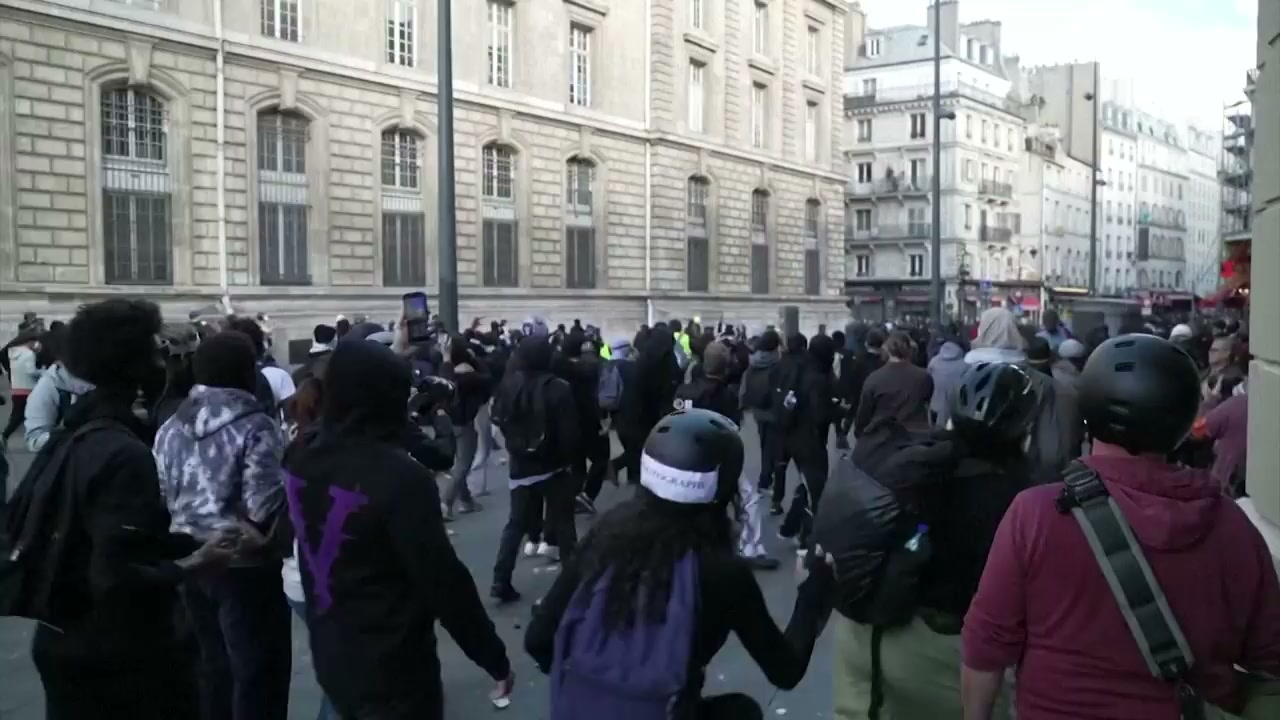
Prime Minister Sébastien Lecornu blamed the ultra-left and criminals. This is an official attribution, not an independently established identity for everyone filmed in black clothing. Reuters’ October 18 follow-up reported about 1,800 detentions and more than 500 injured officers, citing the interior minister. Those are a dated official account, not a final finding of guilt or a complete injury tally for everyone involved.
The policing dispute also predated the largest march. Public Sénat reported the interior minister’s October 16 decision to permit stun grenades in serious confrontations, after their use had been temporarily suspended during the school movement. Injuries, restrictions and the deployment of riot-control weapons became further sources of anger. None of that erases the attacks on officers, shops or public buildings.
Where did it spread in France, Belgium and Italy?
The map shows selected places established in reporting, with dates rather than a single arrow suggesting one crowd moved across Europe. France’s nationwide mobilization and related protests abroad shared themes, but local demands and the scale of violence differed.
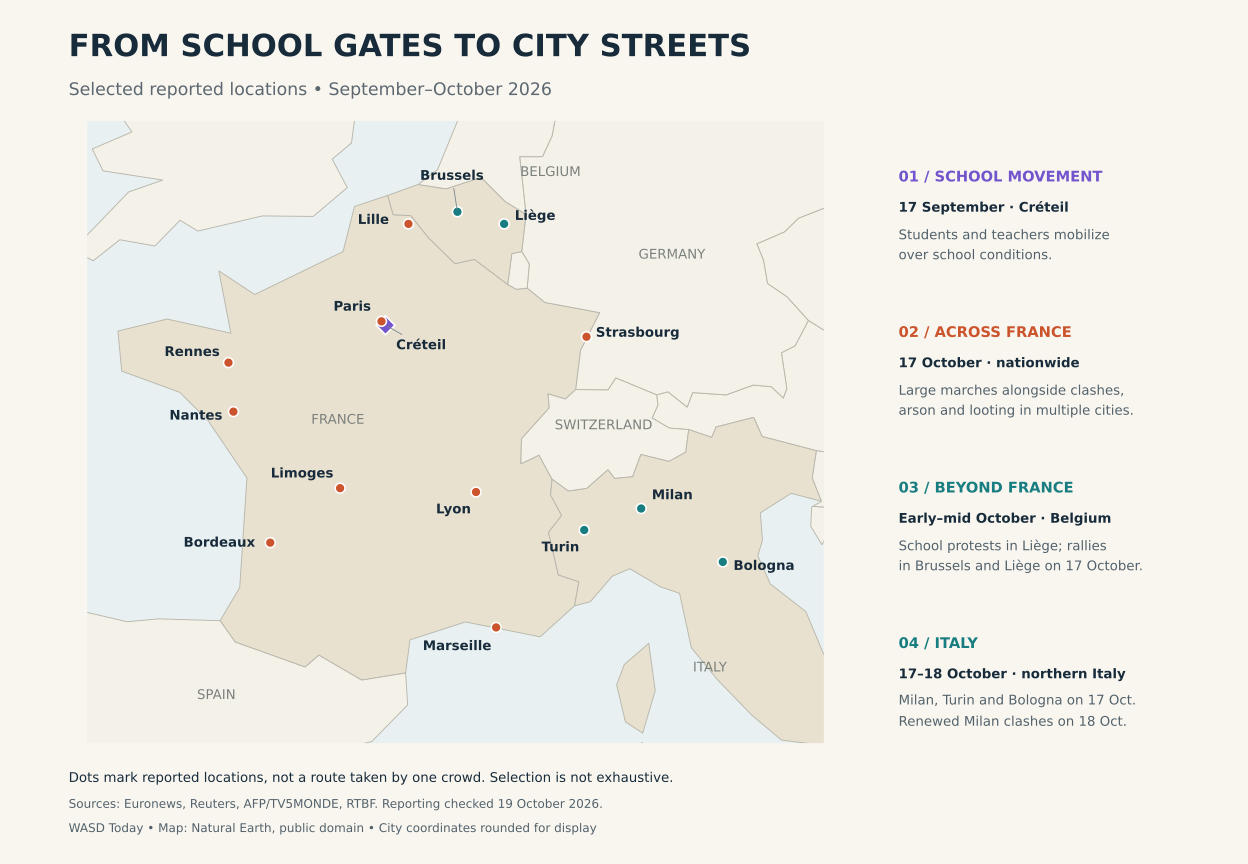
France: AFP’s regional reporting identified shop attacks in Lille, Rennes, Strasbourg, Lyon, Nantes and Bordeaux, among other cities. Reuters separately documented the public-building attacks in Limoges and Marseille. A countrywide story is appropriate; a single-city reconstruction would miss its breadth.
Belgium: The unrest was already visible before October 17. RTBF’s October 5–6 live coverage documented student demonstrations in Liège and Charleroi, with complaints about education costs, transport, crowded classes and equipment. It also reported vandalism, fires and police interventions. TV5MONDE reported further demonstrations in Brussels and Liège on October 17. Belgian grievances were local even where French mobilization supplied inspiration.
Italy: Euronews reported clashes in Milan, Turin and Bologna during the October 17 cost-of-living demonstrations. The October 17 incidents predate the October 18 reporting.
October 19 update: Euronews reported a second day of clashes in Milan on Sunday, October 18, with more than 200 people arrested since Saturday according to ANSA. The account describes renewed confrontations around the Duomo, looted shops and police using water cannon and tear gas. This later figure covers a longer period than the earlier Saturday count; the two should not be added together. The report says Prime Minister Giorgia Meloni called a security meeting for Monday.
TV5MONDE also described wider Italian union mobilization. A large rally and a violent confrontation are not interchangeable. The evidence supports cross-border influence and parallel unrest, not a proven common command structure.
How did the crisis develop over a month?
- September 17: Students and teachers mobilize in Créteil; school grievances spread through social media.
- Early October: School closures and confrontations grow. The 400–500 closure estimate applies to October 5; Belgian student protests are also documented that week.
- October 8: France announces replacement-teacher deployments and other education measures.
- October 17: The French movement joins a much wider day of protest. Clashes also occur in several Italian cities.
- October 18: Clean-up, official casualty updates and support promises for damaged businesses follow the violence.
- October 18–19: A second day of Milan clashes is reported on October 19; arrest figures are updated for the weekend.
Why make the game about saving a shop?
Because the destruction reached people whose immediate concern was keeping a workplace intact. AFP reported attacks on ordinary retailers as well as luxury stores. A Lyon florist interviewed by BFMTV described her window being smashed and people entering despite staff explaining what the business was. That account is much closer to the game’s emotional premise than an abstract argument about crowd numbers.
The damage was not confined to the capital. Reuters reported Bordeaux’s mayor saying up to 100 stores had been looted, alongside emergency help announced in Marseille. Local reporting from Nice described roughly a dozen looted businesses. Those accounts support a France-wide shop-defense premise without claiming our invented store reproduces one owner’s experience.
France 3’s October 18 report from Nice provides a closer account of the games-store scene: its reporter describes a man defending his shop, and the footage shows people returning to express support. The Micromania/Zing signage is visible. That supports the shop-defense theme, but it does not establish the earlier description of a woman held hostage. Our employee, shutter crank and one-minute mission are invented.
Images of people taking goods or breaking windows establish observable actions. They do not automatically explain who organized the act, whether the person had joined a school protest earlier, or their citizenship. Foreign flags and religious clothing likewise cannot settle an immigration explanation for the riots.
What did the government promise?
There were education proposals as well as condemnations of violence. The Education Ministry’s account of measures announced on October 8 lists the rapid deployment of more than 3,000 replacement teachers to schools most in need, authorization for several hundred additional hires and extra hours for short absences. It also describes work on buildings, the school day, guidance and student participation.
These are announced measures, not evidence that every vacancy or building problem has been fixed. The ministry also opened a student consultation through October 23. That gives the story a continuing question: whether practical improvements follow the announcements, alongside accountability for attacks and any unlawful policing.
Where can I play France Burns?
Play France Burns here, free in your browser without an account or installation. As cartoon Napoleon, reach the marked shop, collect its shutter crank and hold the doorway for 60 seconds while your employee closes up. Raise the lid toward attackers and use your limited spray to create space. The cyan ring is a positioning guide. Shop damage begins when at least three active attackers are inside the marked entrance; one or two slipping through trigger a warning, not an instant loss. Your employee keeps cranking for the full minute.
The shop, employee and composite French city are invented. Aircraft crashes, the earthquake, collapsing statue and burning runners are exaggerated arcade events, not events established by this reporting. The selection and placement of international flags, BLM and hammer-and-sickle banners, and civilian outfits are fictional scenery, not clues identifying attackers or a measured inventory of the real crowds. The game turns the fear of losing a business into a defensive challenge; the article explains the real events separately.
Desktop mouse and keyboard have been tested. Touch controls remain experimental. Your result reports your actual attempt; it is not a verified public ranking.
Reporting checked October 19, 2026. Event dates are stated separately from publication dates. Figures are dated and attributed; this is not a live casualty counter. Photographs are credited video stills; the map is an original reporting graphic.